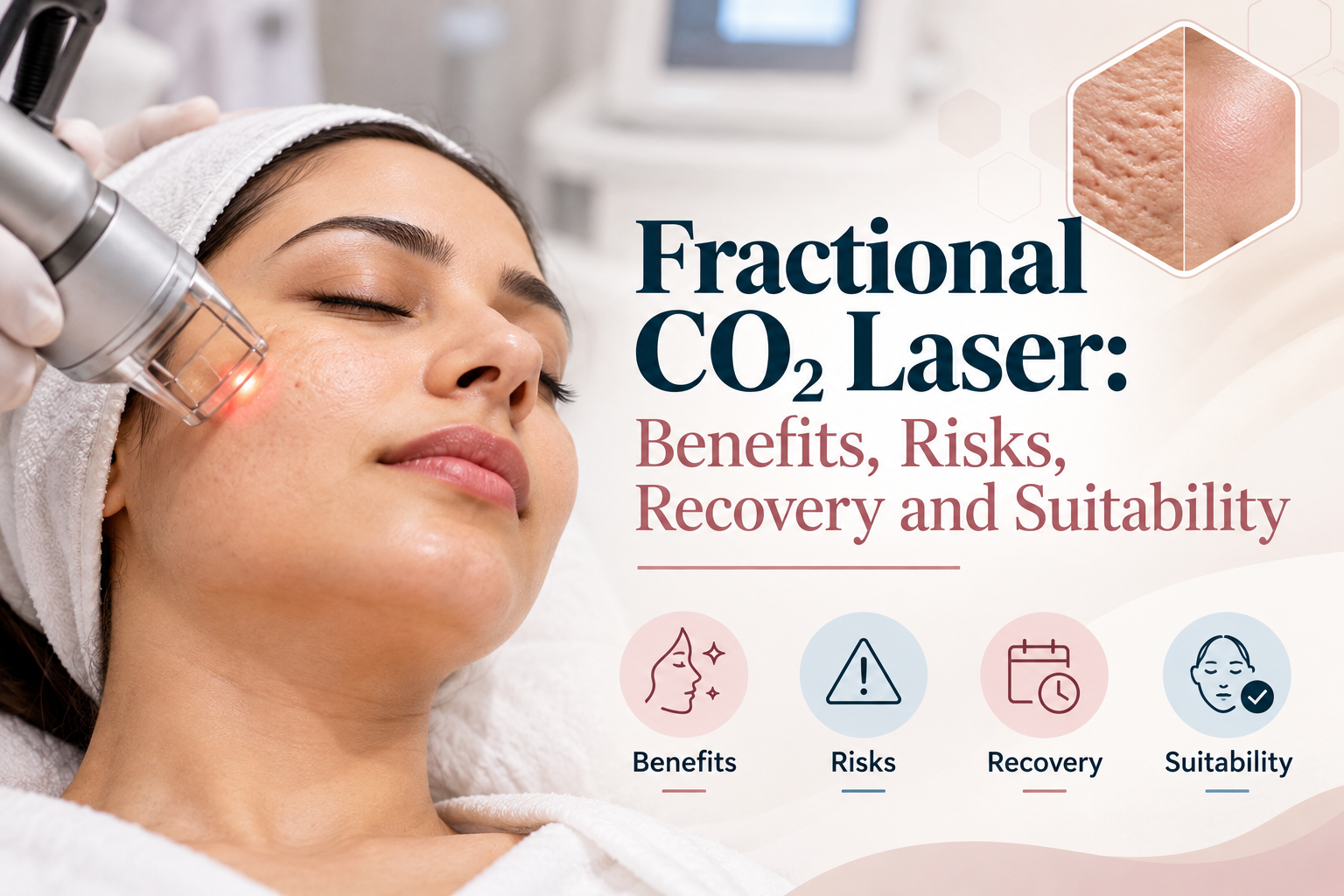
Skin texture concerns, acne scars, fine lines, and certain types of surface irregularities can affect how the skin looks and feels. While skincare products may help with some concerns, more pronounced textural changes may require professional dermatological assessment and procedural treatment.
Fractional CO2 laser treatment in Delhi is one option a dermatologist may consider for selected patients who want to improve the appearance of acne scars, fine lines, and uneven skin texture. The procedure uses controlled laser energy to create microscopic treatment zones in the skin, stimulating a healing response and collagen remodelling.
However, fractional CO2 laser treatment is not suitable for everyone. Understanding its potential benefits, risks, recovery period, and alternatives can help patients make an informed decision before undergoing the procedure.
What Is Fractional CO2 Laser Treatment?
Fractional CO2 laser treatment is a skin-resurfacing procedure that uses carbon dioxide laser energy. The laser creates microscopic columns of controlled thermal injury in the skin while leaving surrounding areas untreated. These untreated areas support the healing process.
As the skin heals, collagen remodelling may gradually improve selected textural concerns. The treatment may be considered for certain acne scars, fine lines, enlarged pores, and other surface irregularities.
Unlike fully ablative resurfacing, which removes a broader area of the skin’s surface, fractional treatment targets only a proportion of the skin during each session. Nevertheless, it is still a procedure that can produce significant inflammation and downtime.
The intensity of treatment depends on the patient’s concern, skin characteristics, device, and settings selected by the treating clinician.
For further information, read the existing guide to fractional CO2 laser treatment in Delhi.
What Skin Concerns Can Fractional CO2 Laser Address?
Fractional CO2 laser may be considered for several skin concerns, although the degree of improvement varies from person to person.
1. Acne scars
Some depressed acne scars may improve with fractional laser resurfacing because the procedure stimulates collagen remodelling. However, different scars respond differently. Deep, tethered, or sharply defined scars may require other procedures or a combination of treatments.
Active acne should generally be brought under control before scar-resurfacing procedures are considered.
For related information, explore this guide to acne scar treatment in Delhi.
2. Fine lines and skin texture
Fractional CO2 laser may help soften the appearance of selected fine lines and improve uneven skin texture. The result depends on the depth of the concern, the treatment intensity, and the skin’s healing response.
It does not stop the natural ageing process, and results cannot be guaranteed.
3. Selected scars
Certain surgical, traumatic, or other scars may improve with laser resurfacing. Suitability depends on the type of scar, its age, location, and whether it is raised, depressed, or associated with abnormal healing.
Raised scars and keloids require particular care because resurfacing alone may not be appropriate.
4. Enlarged pores and uneven skin surface
Fractional laser may improve the appearance of some enlarged pores and textural irregularities. Pore size is influenced by several factors, including genetics, sebum production, and skin structure, so complete pore elimination is not a realistic treatment goal.
5. Selected signs of sun damage
In certain cases, resurfacing may help improve superficial roughness and some signs of photodamage. However, not all pigmentation concerns respond appropriately to CO2 laser treatment. Melasma and pigment-prone skin require particularly careful assessment because heat and inflammation may worsen discolouration.
What Are the Potential Benefits of Fractional CO2 Laser?
Potential benefits include:
Improvement in the appearance of selected depressed acne scars.
Smoother-looking skin texture.
Reduction in the appearance of certain fine lines.
Improvement in selected scar-related irregularities.
Gradual collagen remodelling during healing.
Treatment of more than one suitable textural concern in a planned procedure.
One advantage of fractional treatment is that it leaves untreated areas between the microscopic treatment zones. However, this does not eliminate recovery time or the possibility of complications.
The actual benefit depends on the condition being treated and how the skin responds. Some patients may need several sessions, while others may be better suited to a different procedure.
Who May Be Suitable for Fractional CO2 Laser Treatment?
Suitability should be determined after an in-person assessment by a qualified dermatologist.
You may be considered for treatment if you have:
Certain depressed acne scars.
Persistent textural irregularities.
Selected fine lines or photodamage.
Scars that may respond to resurfacing.
Realistic expectations about improvement and recovery.
The dermatologist will also consider your skin tone, medical history, current skincare routine, previous procedures, tendency to develop pigmentation, and ability to follow aftercare instructions.
Is fractional CO2 laser suitable for Indian skin?
Fractional CO2 laser can be considered for some Indian skin tones, but careful patient selection and treatment planning are essential. Medium to darker skin tones may have a higher risk of post-inflammatory hyperpigmentation after procedures that cause substantial skin inflammation.
This risk does not mean that every person with darker skin must avoid the treatment. It means that the clinician needs to assess the potential benefits against the risks and consider alternative procedures where appropriate.
A conservative approach, suitable settings, appropriate preparation, and careful aftercare may help reduce risk, although complications cannot be completely prevented.
Who May Need to Avoid or Delay Treatment?
Fractional CO2 laser may be unsuitable or require postponement in certain circumstances, including:
Active bacterial, viral, or fungal infection in the treatment area.
Active acne inflammation in the area planned for resurfacing.
Certain inflammatory skin conditions.
A history of keloids or abnormal scar formation.
Recent tanning or significant sun exposure.
Some medicines or medical conditions that may affect healing.
Pregnancy, when an elective cosmetic procedure may reasonably be deferred.
A history of cold sores should also be discussed because resurfacing around the mouth may trigger a recurrence. The clinician may recommend preventive treatment when indicated.
This is not an exhaustive list. Never stop a prescribed medicine independently to prepare for a laser procedure.
What Happens During the Procedure?
The exact process varies according to the device, treatment area, and clinical plan.
Step 1: Skin assessment
The dermatologist examines the skin and identifies the concern being treated. They discuss the expected degree of improvement, potential side effects, downtime, alternatives, and cost.
Step 2: Preparation
The skin is cleaned, and appropriate eye protection is provided. A topical anaesthetic or another pain-control method may be used depending on the procedure and treatment intensity.
Step 3: Laser application
The clinician applies the laser to the selected area using settings appropriate for the treatment plan. The procedure may produce warmth, stinging, or discomfort.
Step 4: Immediate aftercare
The skin may appear red and swollen immediately after treatment. The clinician provides instructions on cleansing, moisturising, sun protection, and wound care.
Patients should know how to contact the treating clinic if unexpected symptoms develop.
What Are the Risks and Side Effects?
Fractional CO2 laser treatment deliberately creates controlled skin injury. Temporary inflammation is expected, but complications are possible.
Common short-term effects
Redness and swelling.
Warmth, stinging, or discomfort.
Tiny crusts or pinpoint areas of bleeding, depending on treatment intensity.
Peeling, dryness, or temporary skin sensitivity.
These effects generally improve as the skin heals, but the duration varies.
Post-inflammatory hyperpigmentation
Dark marks may develop after treatment, particularly in people prone to pigmentation or those exposed to sunlight during recovery. This is an important consideration for Indian skin tones.
Hypopigmentation
In some cases, the treated skin may become lighter than the surrounding area. This may be difficult to reverse, particularly after more intensive treatment.
Infection
Bacterial, viral, or fungal infection can occur, especially if wound-care instructions are not followed or the skin is exposed to contaminated products or environments.
Scarring
Scarring is uncommon but possible. The risk may increase with inappropriate settings, infection, poor healing, or excessive treatment intensity.
Prolonged redness and sensitivity
Redness or irritation can last longer than expected. Patients should contact their clinician if symptoms worsen rather than gradually improve.
Seek prompt medical advice for increasing pain, spreading redness, pus, fever, extensive blistering, or eye symptoms after treatment.
What Is the Recovery Time After Fractional CO2 Laser?
Recovery depends on the treatment intensity, the area treated, individual healing, and the skin’s response.
After a more intensive session, the skin may remain red, swollen, or sensitive for several days. Peeling and tiny crusts may develop as the surface heals. Some people require around a week or longer before the skin looks sufficiently settled for their usual routine.
Redness and pigmentation changes may take longer to resolve than the initial surface healing.
Patients should not assume that every fractional CO2 laser procedure has the same downtime. Ask the dermatologist for an estimate based on the planned settings and treatment area, particularly if you have work, travel, or an important event coming up.
How to care for your skin after treatment
Follow the specific instructions provided by your dermatologist. General measures may include:
Cleanse the treated area gently as instructed.
Use the recommended moisturiser or wound-care product.
Avoid picking, scratching, or peeling the skin manually.
Avoid exfoliating acids, retinoids, scrubs, and other potentially irritating products until cleared by the clinician.
Avoid excessive sun exposure and use sun protection as directed once appropriate for the healing stage.
Avoid swimming, heavy sweating, or activities that may irritate the skin while the surface is healing, according to your clinician’s advice.
Do not apply unprescribed antibiotic creams, steroid creams, home remedies, or active skincare products to healing skin without checking with the treating clinician.
How Many Sessions Are Required?
The number of sessions varies according to the condition being treated, scar depth, treatment intensity, and individual response.
Some patients may be considered for a single session followed by reassessment, while others may need a series of treatments spaced sufficiently far apart to allow healing.
More aggressive treatment is not automatically better. The dermatologist should explain why a particular intensity or number of sessions is being recommended and what degree of improvement is realistic.
Collagen remodelling can continue for weeks or months after treatment, so results should not be judged immediately after the skin’s initial recovery.
Fractional CO2 Laser vs Other Skin Treatments
Fractional CO2 laser is not the only option for acne scars or uneven skin texture.
| Treatment | May be considered for | Important consideration |
|---|---|---|
| Fractional CO2 laser | Selected depressed scars and texture concerns | More noticeable downtime and pigmentation risk |
| Microneedling radiofrequency (MNRF) | Certain acne scars and textural concerns | Results and number of sessions vary |
| Conventional microneedling | Selected mild-to-moderate textural concerns | Multiple sessions may be required |
| Chemical peels | Selected superficial pigmentation and texture concerns | Peel strength and skin type affect suitability |
| Subcision | Certain tethered, depressed acne scars | Often requires specific scar assessment |
No single procedure is best for every patient. For additional information, read about fractional CO2 laser and fractional microneedling.
Questions to Ask Before Booking Fractional CO2 Laser Treatment in Delhi
Before proceeding, consider asking the dermatologist:
What is the exact skin concern this treatment is intended to improve?
Am I a suitable candidate given my skin tone and medical history?
What improvement is realistic in my case?
What alternatives could provide similar benefits?
How much downtime should I plan for?
What are my risks of pigmentation changes or scarring?
How many sessions may be required?
What aftercare and follow-up will I need?
These questions help you understand the procedure and make an informed decision rather than relying on advertised results alone.
For more guidance, read 10 questions to ask before choosing a dermatologist for laser skin treatments in Delhi.
Frequently Asked Questions
1. Is fractional CO2 laser treatment painful?
The sensation varies. Patients may experience warmth, stinging, or discomfort. A topical anaesthetic or another suitable pain-control method may be used, depending on the procedure.
2. Can fractional CO2 laser remove acne scars completely?
Complete removal cannot be guaranteed. Selected scars may become less noticeable, but improvement depends on scar type, depth, skin characteristics, and treatment response.
3. Is fractional CO2 laser safe for darker skin?
It may be suitable for selected patients, but the risk of pigmentation changes needs careful consideration. A dermatologist should assess the skin and discuss alternatives before treatment.
4. How long does fractional CO2 laser recovery take?
The initial recovery may take several days to a week or longer, depending on treatment intensity. Redness and pigmentation changes can persist after the surface has healed.
5. Can I apply makeup after fractional CO2 laser?
Makeup should generally be avoided while the skin is raw, crusted, or not fully healed. Ask your dermatologist when it is appropriate to resume makeup based on your recovery.
6. Can fractional CO2 laser treat pigmentation?
It may help selected concerns, but it is not appropriate for every pigmentation disorder. Conditions such as melasma require particular caution because inflammation may worsen pigmentation.
7. Can I go out in the sun after treatment?
Avoid unnecessary sun exposure during recovery and follow your dermatologist’s sun-protection instructions. Sun exposure can worsen inflammation-related pigmentation.
8. Is one session enough?
Some patients may see improvement after one session, while others require multiple treatments. The expected course depends on the skin concern and treatment plan.
Conclusion
Fractional CO2 laser treatment in Delhi may be considered for selected acne scars, fine lines, and uneven skin texture. It works by creating controlled microscopic treatment zones that stimulate the skin’s healing response and collagen remodelling.
However, the procedure has meaningful risks, including pigmentation changes, infection, prolonged redness, and scarring. Careful assessment, appropriate treatment settings, realistic expectations, and diligent aftercare are essential.
A consultation with a qualified dermatologist can help determine whether fractional CO2 laser is suitable for your skin or whether another treatment would be a better option.
Medical disclaimer: This article is for general educational purposes only and does not replace a medical consultation. Treatment suitability, risks, recovery, and outcomes vary between individuals.
Leave a Reply
You must be logged in to post a comment.