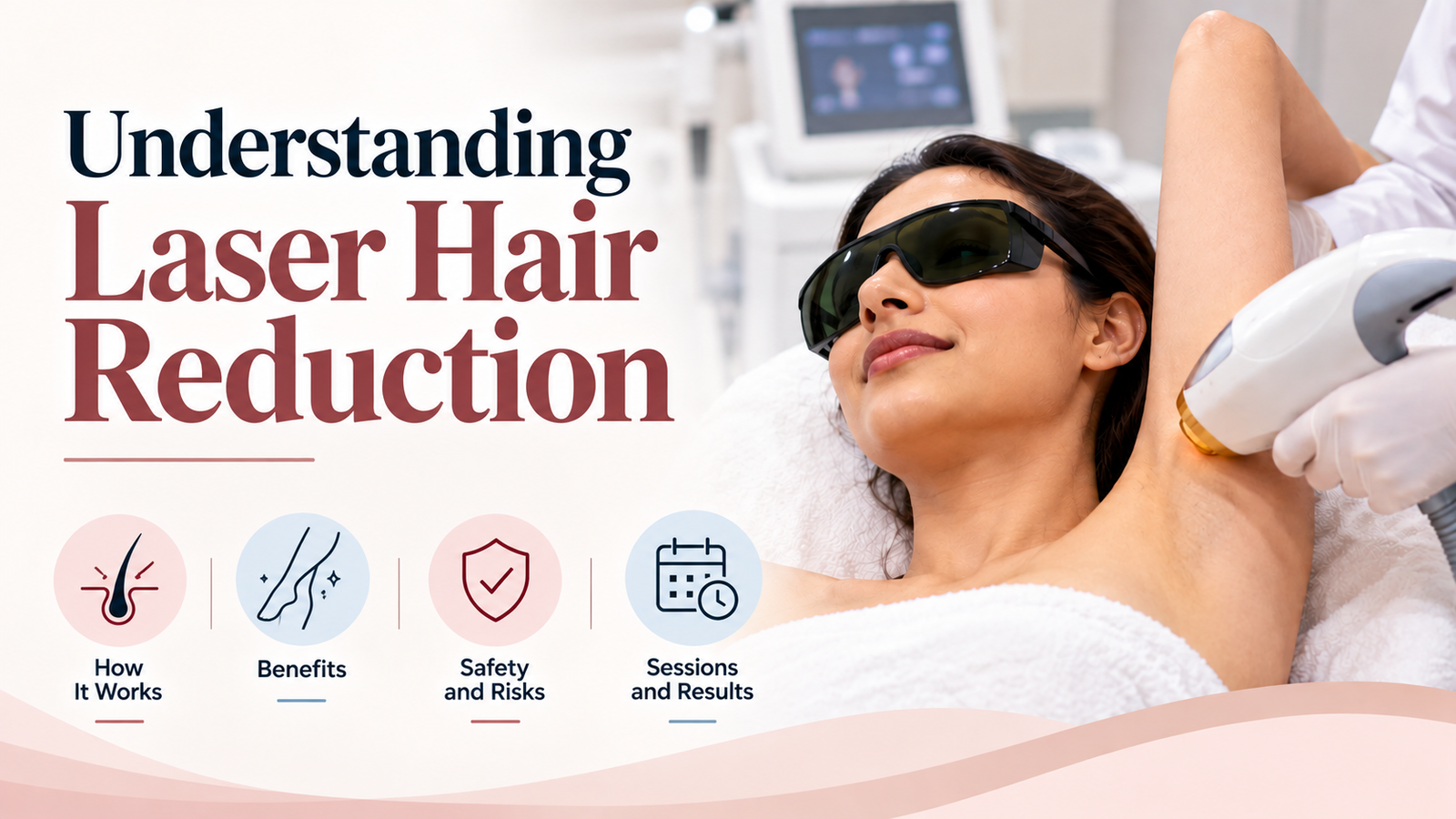
Unwanted hair on the face or body is a common concern. Shaving, waxing, and threading can manage hair temporarily, but some people consider laser hair reduction for longer-lasting reduction in hair growth.
Anyone researching laser hair reduction in Delhi should understand how the procedure works, what results may be expected, and why treatment settings must be selected according to skin tone, hair characteristics, and medical history.
How does laser hair reduction work?
Laser hair reduction uses light energy that is absorbed by pigment in the hair. The energy produces heat that damages structures involved in hair growth.
Because hair grows in different phases, not every follicle responds equally during one session. A series of sessions is generally required, with intervals determined by the treatment area and the individual’s hair-growth pattern.
Laser treatment typically reduces hair growth rather than guaranteeing permanent removal of every hair. Maintenance sessions may be needed.
For further information, read the existing page on laser hair reduction.
Who may be suitable for the procedure?
Suitability depends on several factors, including hair colour, thickness, skin tone, the treatment area, medical history, and expectations.
Dark, coarse hair often responds better because it contains more pigment for the laser to target. Very light, grey, white, or some red hairs may respond poorly to conventional hair-reduction lasers.
A consultation is especially important for people with sensitive skin, a history of pigmentation changes, active skin disease, or medicines that may affect photosensitivity.
Excess facial hair may sometimes be associated with hormonal conditions. If hair growth is accompanied by irregular periods or other hormonal symptoms, the underlying cause may need assessment as well.
What should you expect during a consultation?
The clinician should review your medical history, medicines, skin type, hair characteristics, and previous reactions to laser or light-based procedures.
You should be able to discuss:
Which device and wavelength may be suitable.
The expected number and spacing of sessions.
The likely degree of hair reduction.
Potential side effects and recovery.
Pre-treatment and post-treatment care.
Whether a test spot is appropriate.
A trained professional should explain the procedure and its limitations before treatment begins.
How should you prepare?
Preparation instructions vary by device and clinical circumstances. General precautions may include:
Avoid tanning and excessive sun exposure before treatment.
Follow instructions about shaving the treatment area.
Avoid waxing or plucking for the recommended period because these remove the hair targeted by the laser.
Tell the clinician about all medicines, supplements, recent skin treatments, and any history of cold sores or skin conditions.
Use eye protection appropriate for the laser being used.
Do not proceed without discussing recent tanning, skin irritation, or a medicine that may increase sensitivity to light.
What are the possible side effects?
Temporary redness, swelling around hair follicles, or mild discomfort can occur after treatment.
Less common but more serious complications include burns, blisters, scarring, infection, and lighter or darker patches of skin. The risk may increase when the device or settings are unsuitable or aftercare instructions are not followed.
Laser treatment around the eyes requires particular precautions. Appropriate protective eyewear and trained operation are essential.
What aftercare is recommended?
Follow the clinician’s instructions for caring for the treated area. Avoid excessive heat or friction if the skin is irritated, and use suitable sun protection on exposed areas.
Do not pick at crusts or blisters. Contact a healthcare professional if you experience severe pain, blistering, spreading redness, or unexpected pigment changes.
Frequently asked questions
How many sessions are needed? The number varies by body area, hair characteristics, device, and response. Multiple sessions are usually required.
Is laser hair reduction permanent? It can provide long-term reduction, but complete permanent removal cannot be guaranteed. Some hair may regrow and maintenance may be needed.
Can laser hair reduction be performed on Indian skin tones? It may be suitable, but device choice and settings must be selected carefully to reduce the risk of burns and pigmentation changes.
Does the procedure hurt? Sensations vary and may feel like brief pinpricks or warmth. Cooling systems may help improve comfort.
Can hormonal hair growth return? Yes. Hormonal influences may continue to stimulate hair growth, so some people need additional sessions or assessment for an underlying condition.
Conclusion
Laser hair reduction in Delhi may be an option for people seeking longer-lasting reduction in unwanted hair. A consultation, suitable device selection, trained operation, and appropriate aftercare help support a safer treatment experience.
Medical disclaimer: This article provides general information and does not guarantee a particular treatment outcome. Suitability should be assessed individually.
Leave a Reply
You must be logged in to post a comment.