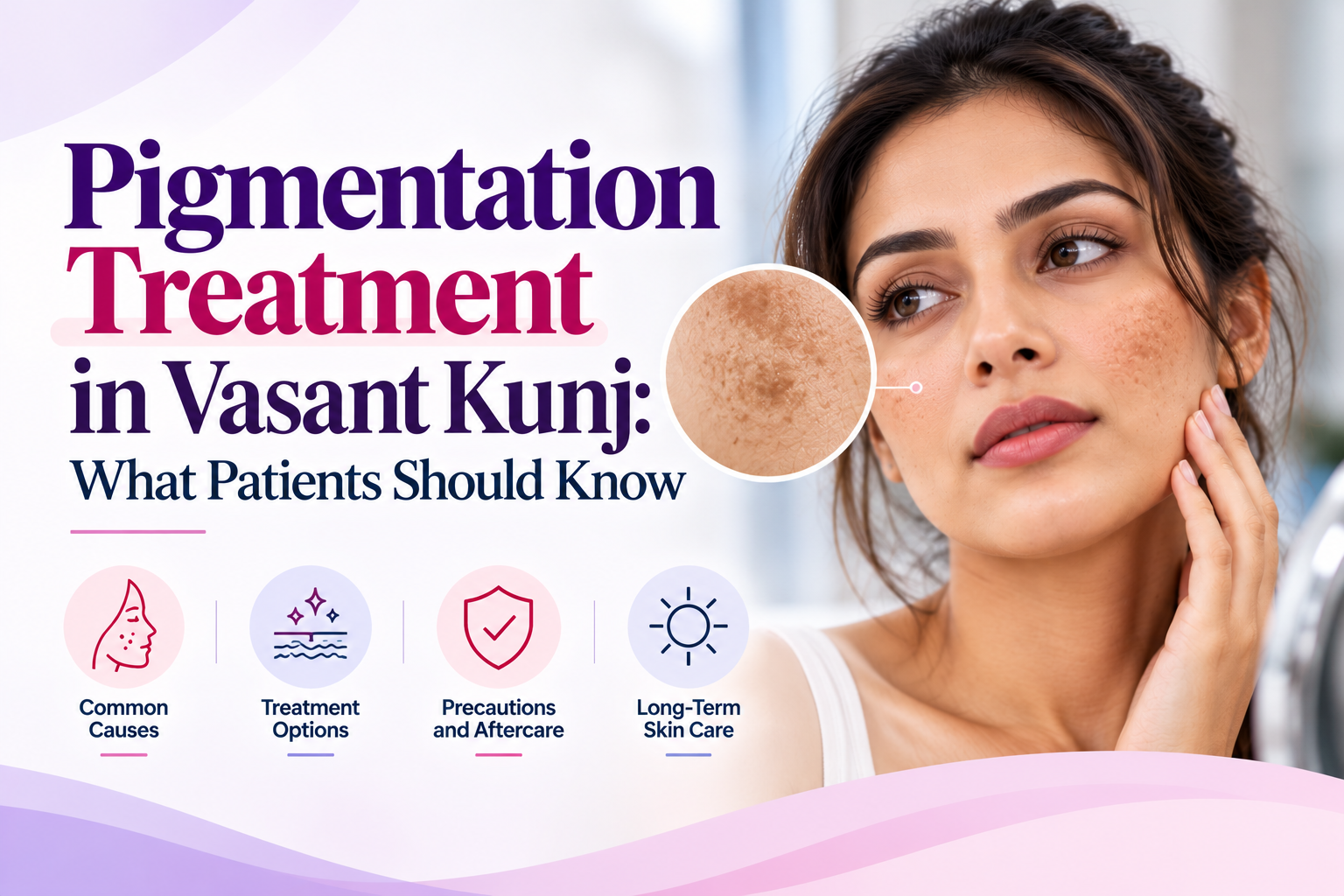
Dark spots, uneven skin tone, and brown patches are common skin concerns. They may develop gradually or appear after acne, inflammation, hormonal changes, or sun exposure. Although pigmentation is often harmless, the correct treatment depends on identifying its cause.
People researching pigmentation treatment in Vasant Kunj should understand that different types of pigmentation may look similar but require different approaches. A product that helps one condition may irritate or worsen another.
What causes skin pigmentation?
Melanin is the pigment that gives skin its colour. Increased melanin production or uneven pigment distribution can result in darker patches.
Common causes include:
Sun exposure: Ultraviolet radiation can contribute to dark spots and uneven skin tone.
Melasma: Often appears as symmetrical brown or grey-brown patches, commonly on the cheeks, forehead, or upper lip.
Post-inflammatory hyperpigmentation: Dark marks that remain after acne, eczema, injury, or irritation.
Hormonal influences: Hormonal changes can contribute to melasma in susceptible individuals.
Certain medicines or skin conditions: Some may cause changes in skin colour.
Pigmentation may have more than one cause. This is why identifying the condition is an important first step.
For related information, see this existing guide to pigmentation and dark spots.
When should you seek medical assessment?
Consider consulting a dermatologist if pigmentation persists, spreads, repeatedly returns, or does not improve with suitable skincare.
A spot that changes rapidly in size, shape, or colour, or that bleeds or develops an unusual appearance, should be assessed promptly rather than treated as routine pigmentation.
During a consultation, the dermatologist may ask when the patches started, whether they change with sunlight, what products you use, and whether you have a history of acne, eczema, or hormonal changes.
An examination helps distinguish melasma, post-inflammatory pigmentation, and other skin conditions. Additional tests are sometimes needed, depending on the presentation.
What treatments may be considered?
Treatment depends on the diagnosis, skin type, severity, and previous response to treatment.
Topical medicines: Depending on the condition, a dermatologist may prescribe ingredients such as azelaic acid, retinoids, or other pigment-modifying medicines. Some treatments are unsuitable during pregnancy or may cause irritation, so professional guidance is important.
Chemical peels: Selected peels may be considered for certain types of pigmentation. The formulation and strength should be chosen carefully, particularly for darker skin tones that may be more susceptible to post-inflammatory pigmentation.
Laser-based procedures: Certain devices may be considered for selected pigmentation disorders. Laser treatment is not appropriate for every type of pigmentation, and it may cause burns, irritation, or further darkening if used incorrectly.
Treatment of the underlying condition: If pigmentation follows acne or eczema, managing the original inflammation is important to prevent additional marks.
Explore the clinic website’s information about dermatology services and treatments for related educational resources.
Why sunscreen matters
Sun protection is a central part of pigmentation management. Sunlight can worsen several forms of pigmentation, including melasma and post-inflammatory dark marks.
Consider these measures:
Use broad-spectrum sunscreen with SPF 30 or higher.
Apply an adequate amount to exposed skin.
Reapply approximately every two hours outdoors and after swimming or heavy sweating.
Wear a wide-brimmed hat and seek shade where practical.
Avoid skincare products that cause persistent burning or irritation.
People with melasma may also benefit from discussing visible-light protection, including tinted sunscreens containing iron oxides, with their dermatologist.
Common mistakes to avoid
Do not apply strong bleaching creams, steroid-containing combination creams, or unlabelled products without medical advice. Prolonged or inappropriate use can lead to skin thinning, irritation, and other complications.
Lemon juice, harsh scrubs, and aggressive home peels can irritate skin and potentially make pigmentation worse. Avoid starting several active ingredients at once, especially if your skin is sensitive.
Frequently asked questions
Can pigmentation be removed permanently? The outcome depends on the cause. Some dark marks fade over time, while conditions such as melasma may recur and require ongoing maintenance.
How long does pigmentation treatment take? Improvement often takes weeks to months. The timeline varies with the diagnosis and treatment.
Is laser treatment suitable for everyone? No. The cause of pigmentation and the patient’s skin characteristics must be assessed first.
Does sunscreen help dark spots? Yes. Consistent sun protection can help prevent worsening and support the results of other treatments.
Can acne cause pigmentation? Yes. Inflammation from acne may leave dark marks even after the active lesions have resolved.
Conclusion
Pigmentation treatment in Vasant Kunj should begin with identifying the cause of the discolouration. Appropriate skincare, sun protection, and carefully selected medical or procedural treatment may help, but results and risks vary between individuals.
Medical disclaimer: This information is educational and should not be used as a substitute for a dermatological examination.
Leave a Reply
You must be logged in to post a comment.