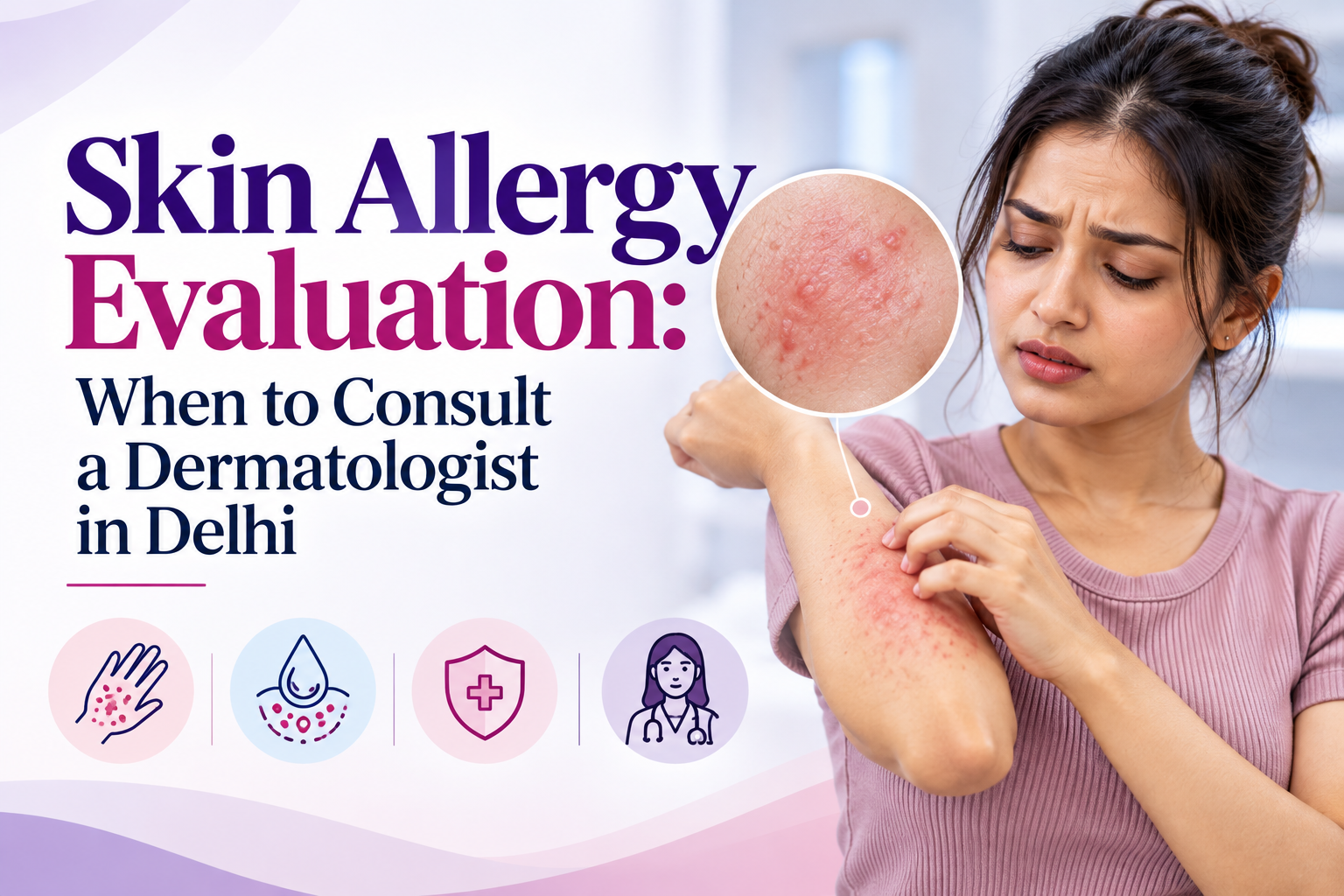
Redness, itching, swelling, and rashes can occur for many reasons. Sometimes the cause is an allergic reaction; in other cases, irritation, infection, eczema, or another skin condition may produce similar symptoms.
People searching for a skin allergy dermatologist in Delhi should know that identifying the trigger is often as important as treating the symptoms.
What is a skin allergy?
A skin allergy occurs when the immune system reacts to a substance that triggers an allergic response. Contact dermatitis is one example and may develop after exposure to substances such as fragrances, preservatives, nickel, or certain topical products.
Irritant contact dermatitis is different: it results from direct skin damage or irritation rather than an allergy. Frequent exposure to soaps, detergents, solvents, or other irritants may contribute.
Hives, also called urticaria, cause raised, itchy welts that may come and go. They can have several triggers, and a specific allergen is not always identified.
What symptoms should you look for?
Possible symptoms include:
Redness or inflamed patches.
Itching or burning.
Dry, cracked, or scaly skin.
Small bumps, blisters, or swelling.
A rash appearing after contact with a product or material.
Recurrent symptoms in the same area.
The timing and location of a rash can help the dermatologist narrow down possible causes. However, appearance alone may not be enough to distinguish allergy from infection or another skin condition.
When should you consult a dermatologist?
Arrange an assessment if the rash keeps returning, spreads, interferes with sleep, or fails to improve after you stop using a suspected product.
You should also seek medical attention if the rash is painful, oozing, infected-looking, or accompanied by fever.
Seek emergency care immediately if you develop difficulty breathing, throat or tongue swelling, faintness, or other signs of a severe allergic reaction.
For further general guidance, read the website’s article on skin symptoms that may warrant a dermatologist’s assessment.
How is a skin allergy diagnosed?
A dermatologist may ask when symptoms began, where they first appeared, whether they recur, and which products, medicines, metals, gloves, cosmetics, or workplace substances you encounter.
A skin examination helps assess the pattern and severity of the rash. In selected cases, patch testing may help identify allergic contact dermatitis. It involves applying small amounts of specific substances to the skin under controlled conditions and checking for reactions at designated times.
Patch testing is not the same as testing for every type of allergy. The appropriate investigation depends on the symptoms and suspected trigger.
What treatment options may help?
Avoiding the trigger: Identifying and reducing contact with the causative substance is often central to managing allergic contact dermatitis.
Moisturisers and skin-barrier care: Fragrance-free emollients may help support the skin barrier and reduce dryness.
Prescription topical medicines: A clinician may recommend an appropriate anti-inflammatory treatment, depending on the diagnosis, affected area, and severity.
Other treatments: Widespread or persistent conditions may require additional evaluation or treatment. The approach depends on whether the problem is allergic contact dermatitis, eczema, hives, or another disorder.
Avoid using steroid creams or combination products without advice, especially on the face, eyelids, groin, or other sensitive areas. Incorrect use can cause complications or mask another condition.
How can you reduce the risk of repeat reactions?
Introduce new skincare products one at a time.
Read ingredient lists and avoid known triggers.
Use protective gloves when appropriate, while avoiding materials that themselves cause reactions.
Choose gentle cleansers and moisturisers.
Keep a record of products and activities associated with flare-ups.
Follow the recommended treatment and review plan.
Do not deliberately reapply a suspected allergen to test whether it causes another reaction.
Frequently asked questions
Is every itchy rash an allergy? No. Eczema, infections, insect bites, irritation, and other conditions may cause itching.
Can cosmetics cause skin allergies? Yes. Fragrances, preservatives, and other ingredients can cause allergic or irritant reactions in some people.
What is patch testing? It is a controlled test used to investigate suspected allergic contact dermatitis.
Can skin allergies be cured permanently? Some reactions can be prevented by avoiding the trigger, while other conditions may recur or need ongoing management.
Should I stop all skincare products when a rash develops? Avoid suspected irritants and seek advice about what to discontinue. The right approach depends on the severity and location of the reaction.
Conclusion
A skin allergy evaluation in Delhi can help distinguish allergic reactions from irritation, eczema, infection, and other conditions. Identifying the likely trigger and choosing appropriate treatment may reduce symptoms and help prevent future episodes.
Medical disclaimer: This article is for educational purposes only. It does not replace medical evaluation or emergency care when required.
Leave a Reply
You must be logged in to post a comment.