If you have acne scars, open pores, rough texture or the first signs of ageing, someone has probably told you to try microneedling. It is one of the most talked-about skin treatments in Delhi, but few people explain what it is really like: how it feels, how long the redness lasts, when you can wear makeup again, and who should think twice.
This guide walks you through microneedling for the face from the first consultation to the last day of recovery, so you know what to expect before you book.
How microneedling works
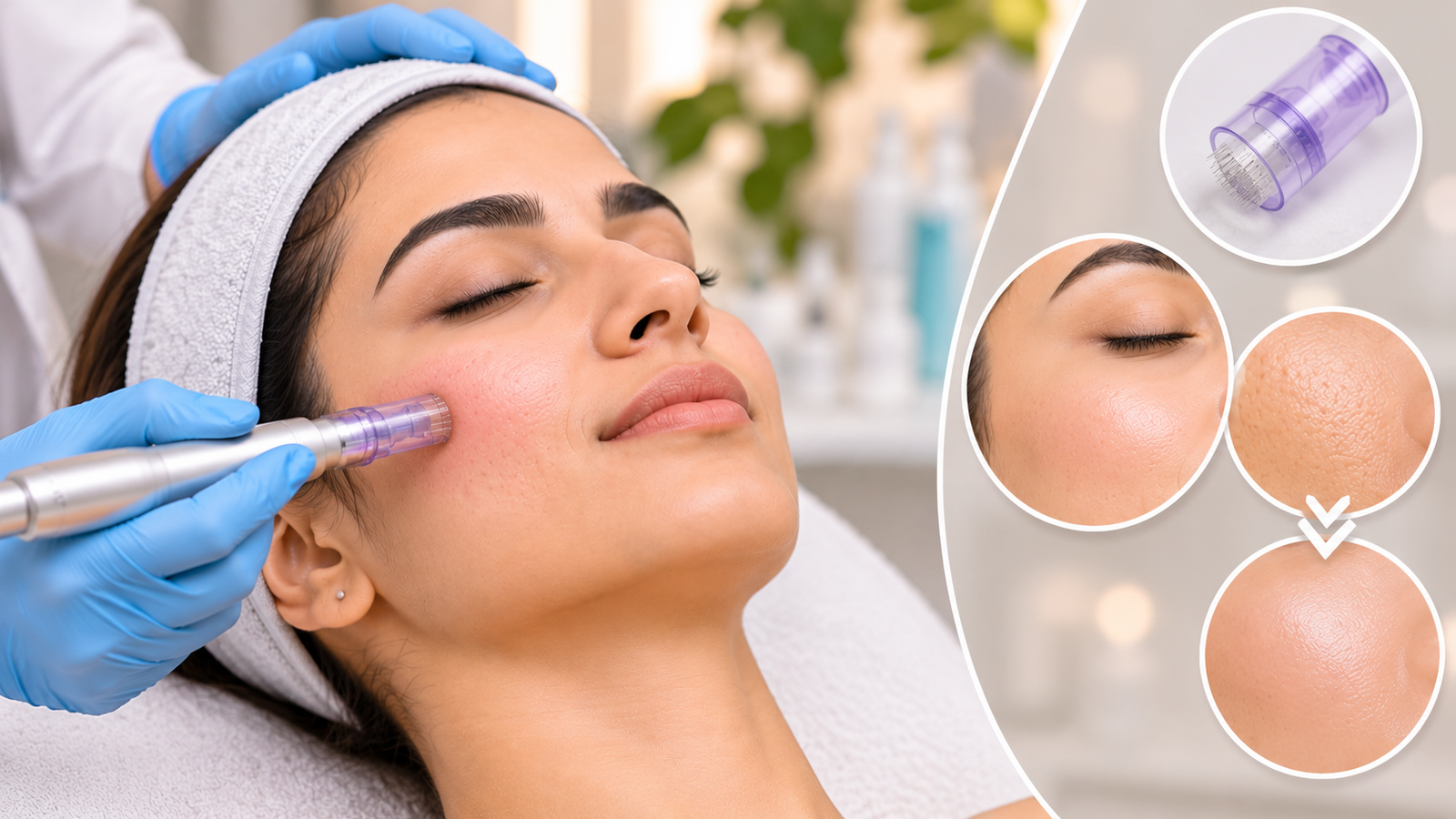
Microneedling uses very fine, sterile needles to create thousands of microscopic channels in the skin. These are far too small to see afterwards, but the skin treats them as minor injuries and starts a repair process. That process produces new collagen and elastin, the proteins that keep skin firm and smooth. Over weeks, many people see softer scars, finer texture and a more even look.
There are two broad versions you will hear about:
- Microneedling: needles alone.
- Microneedling radiofrequency (MNRF): needles that also deliver radiofrequency energy into the deeper skin, adding a tightening effect. At KARA Skin Clinic, MNRF is performed with the Secret RF device.
Your dermatologist chooses between them based on your concern, your skin type and how much downtime you can manage.
What can microneedling treat on the face?
- Acne scars, especially shallow boxcar and rolling scars
- Enlarged pores and rough texture
- Fine lines and early wrinkles
- Dull, tired-looking skin
- Mild skin laxity, where MNRF is more useful
- Uneven tone and some types of pigmentation, when combined with the right medical treatment
- Surgical or injury scars, once they have healed
It is not a cure-all. Deep, pitted scars often need a combination plan that may include fractional laser, subcision or fillers. Active acne needs to be treated first.
Is it suitable for Indian skin?
Yes, in the right hands. Indian skin tones tend to develop dark marks after inflammation or injury, which is called post-inflammatory hyperpigmentation. Microneedling is often chosen over harsher resurfacing lasers because it leaves the top layer of skin largely intact, but settings, needle depth and aftercare still matter. This is a good reason to have it done under a dermatologist’s guidance rather than at a place that offers it as a routine beauty service.
What happens during a session?
- Consultation. The doctor examines your skin, asks about your medicines and history, and decides whether you are a good candidate.
- Cleansing and numbing. The face is cleaned and a numbing cream is applied for roughly half an hour or as advised.
- Treatment. The device is passed over the skin in a pattern. You feel pressure and a scratching sensation, and some areas such as the forehead and upper lip are more sensitive. The actual treatment takes about 30 minutes.
- Soothing. A calming product is applied and you are given sunscreen and aftercare instructions.
Downtime day by day
Recovery differs from person to person and depends on the depth and the device, so treat this as a general guide. Your doctor will give you instructions that match your own session.
| When | What you may notice | What to do |
|---|---|---|
| Same day | Redness like mild sunburn, warmth, slight tightness | Keep the skin clean, use only what the doctor advised, avoid touching |
| Day 1–2 | Redness fading, mild swelling (more after RF), tight feeling | Gentle cleanser, moisturiser, sunscreen, no makeup if possible |
| Day 3–5 | Dryness, fine flaking, small rough patches | Do not pick or scrub. Keep moisturising |
| Day 5–7 | Most visible signs settled, skin looks fresher | Resume normal routine as advised |
| After 1 week | Skin looks smoother, results continue to build | Strict sun protection continues |
Most people go back to work the next day or after two days. If you have an important event, plan your session about a week before it.
Aftercare essentials
- Apply sunscreen every morning, and reapply if you are outdoors. Delhi’s sun and pollution make this the single most important step.
- Avoid strong skincare actives such as retinoids, acids and exfoliating scrubs until your doctor says it is safe.
- Avoid hot showers, saunas, heavy workouts and swimming for the first couple of days.
- Do not pick at flakes or crusts.
- Skip makeup for the first day or as your doctor advises, and use clean brushes afterwards.
- Keep your follow-up appointment.
How many sessions will you need and when do results show?
A typical plan is 3 to 6 sessions about 4 to 6 weeks apart. You may notice a healthier glow within a week or so, but scar and texture improvement builds slowly, as collagen takes weeks to months to form. Results are better when treatment is combined with good sun protection and a skincare routine suited to your skin.
Risks and who should avoid it
Possible side effects include redness, swelling, dryness and pinpoint bleeding. Less common problems include infection, cold sore flare-ups, dark marks and scarring, usually linked to poor technique, non-sterile equipment or ignoring aftercare.
Treatment is usually delayed or avoided if you have:
- Active acne breakouts, infection or a cold sore in the treated area
- A history of keloid or raised scars
- Bleeding disorders or blood-thinning medicines
- Pregnancy
- Recent use of some acne medicines or recent heavy sun exposure
- Certain skin conditions that can flare up after skin injury
Be fully honest with your doctor about your history and medicines.
Microneedling vs other treatments
| Treatment | Best for | Downtime |
|---|---|---|
| Microneedling | Mild scars, texture, glow | Short |
| MNRF | Scars, laxity, lines, pores | Short to moderate |
| Chemical peel | Tone, pigmentation, mild scars | Short |
| Fractional CO2 laser | Deeper scars, stronger resurfacing | Longer |
| PRP with microneedling | Glow, healing, scars | Short |
A good clinic will explain why it recommends one over the other, and will not push every patient to the same treatment. You can read more about chemical peels and acne scar treatment if you are comparing options.
Microneedling for face at KARA Skin Clinic, Vasant Kunj
At KARA Skin Clinic, microneedling and MNRF are planned by Dr Rashmi Sharma, a dermatologist with DNB, DVDL and MBBS qualifications who has presented on microneedling devices at the 25th World Congress of Dermatology in Singapore. Your visit starts with a skin assessment, and you leave with a clear plan, number of sessions and cost.
Frequently asked questions
Does microneedling hurt? Numbing cream makes it comfortable for most people. Expect pressure and mild stinging.
How long does the redness last? Usually one to three days, sometimes a little longer after RF.
Can I wear makeup afterwards? Usually not on the same day. Ask your doctor when it is safe for your session.
Will it remove acne scars completely? It can improve them noticeably, but complete removal is not a realistic promise, especially for deep scars.
Is it safe during pregnancy? It is usually postponed during pregnancy.
How long do results last? Collagen changes can last a long time, but ageing and sun exposure continue, so occasional maintenance helps.
What does it cost? Price depends on the type of treatment, device and area. See our guide to microneedling cost in Delhi.
Results vary from person to person. This article is general information and does not replace a consultation.
Leave a Reply
You must be logged in to post a comment.