Hair fall is one of the most common reasons people visit a dermatologist, and PRP is one of the treatments most often suggested. It is also one of the most oversold. Some clinics promise thick hair in a few sessions, while others use PRP on people who will not benefit from it.
This guide explains what PRP hair treatment is, who it works for, what the process and recovery are like, how long results take, what affects the price, and how to judge whether a clinic is doing it properly.
What is PRP for hair?
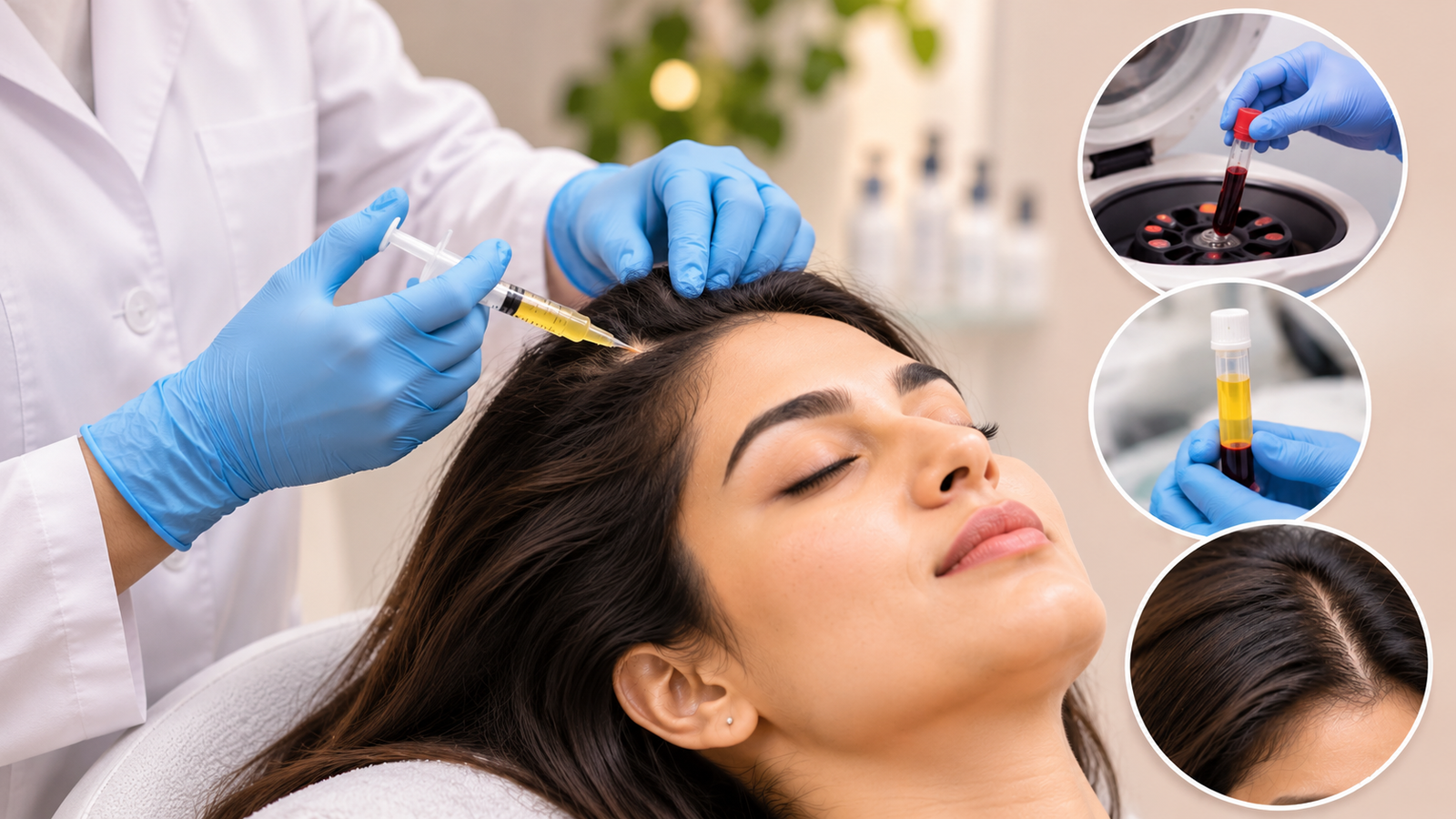
PRP stands for platelet-rich plasma. A small sample of your own blood is taken, spun in a centrifuge to concentrate the platelets, and the resulting plasma is injected into the scalp. Platelets release growth factors that are thought to support hair follicles and may help prolong the growth phase of the hair cycle. Because it uses your own blood, allergic reaction is unlikely.
Who is PRP most suitable for?
PRP is mainly used for androgenetic alopecia, the common pattern hair loss seen in men and women, particularly in the early to moderate stages when the follicles are thinned but still alive. It may also be used as part of a plan for some other types of hair loss, but results can be less predictable.
PRP tends to give limited benefit when:
- The scalp is already completely bald and follicles are no longer active
- Hair loss is due to scarring conditions of the scalp
- The cause of hair fall is not being treated, such as thyroid disease, anaemia, nutritional deficiency or high stress
- You expect it to work as a stand-alone cure without any other treatment
This is why a diagnosis comes first. Hair loss has many causes, and treating the wrong one wastes money and time.
What to expect at the first consultation
A proper hair consultation includes:
- A detailed history: how long, how much, family history, diet, stress, illnesses, medicines
- Examination of the scalp and hair, sometimes with a magnifying device called a dermoscope
- Blood tests when needed, such as thyroid function, haemoglobin, ferritin, vitamin D and B12, and hormones in women with signs of hormonal imbalance
- A treatment plan that may combine PRP with medicines, supplements or other therapies
Dr Rashmi Sharma has presented research on premature greying of hair at the DERMACON national conference, and hair disorders are among the conditions she manages in dedicated clinics.
How is the PRP procedure done?
- Blood draw. A small amount of blood is taken from your arm, as for a routine test.
- Processing. The blood is spun in a centrifuge to separate the platelet-rich plasma. This takes some minutes.
- Numbing. The scalp may be numbed or cooled to ease discomfort.
- Injection. The PRP is injected in tiny amounts across the thinning areas, or applied with a microneedling device.
- After. You can usually go home right away.
The whole visit usually takes around an hour. The procedure is done in a single sitting, with fresh PRP prepared on the day.
Sessions and results timeline
PRP is a course, not a one-time treatment. A common plan is 3 to 4 sessions about a month apart, followed by maintenance sessions every few months, though your doctor will tailor this.
- First 1–2 months: Hair shedding may reduce. Some people notice a temporary increase in shedding at first as weak hairs fall out.
- Around 3 months: Early signs of thicker, stronger hair for some people.
- 4–6 months: The usual point when visible improvement can be judged.
- After that: Maintenance is needed, because pattern hair loss is an ongoing process.
Not everyone responds equally. Good results are more likely when PRP is started early and combined with the right medical treatment, and a doctor will tell you honestly if you are unlikely to benefit.
Is PRP painful? What about side effects?
Most people describe the injections as uncomfortable but tolerable. Common effects include scalp tenderness, mild swelling, a headache, a feeling of tightness and small spots of bleeding. These usually settle within a day or two. Rarely, infection or scalp irritation can occur, which is why sterile technique and a single-use kit matter. Avoid vigorous scalp massage, heavy exercise and hair colouring for a short period afterwards, as your doctor advises.
PRP hair treatment price in Delhi
PRP is priced per session, and clinics often offer packages. The cost depends on:
- The kit and method. Different PRP kits and preparation methods have different costs and platelet concentrations.
- Area treated. A small receding area costs less than the whole scalp.
- Number of sessions in your plan, and whether maintenance is included.
- Add-on treatments such as microneedling, medicines or growth factor boosters.
- Who performs it and whether the doctor is involved in planning.
- Clinic setting and hygiene standards.
KARA Skin Clinic price: [ADD: price per session and package details].
Be cautious about very low prices that do not say what kit is used, and about pressure to pay for a large package before a diagnosis. For a price breakdown, see PRP hair treatment cost in Delhi.
How to judge a good PRP clinic
Instead of searching only for the “best PRP treatment in Delhi”, look for these signs (our guide to choosing a skin doctor in Delhi NCR covers the general checklist):
- A doctor examines your scalp and asks about the cause of your hair loss before suggesting PRP.
- They tell you who is not a good candidate.
- Blood is drawn in front of you, and a fresh, single-use sterile kit is opened.
- The PRP is prepared on the day, not stored or reused.
- You get a clear plan with the number of sessions, price and follow-up.
- They explain realistic results and do not promise regrowth.
- They discuss medicines or other supportive treatment where appropriate.
Frequently asked questions
Is PRP permanent? No. It helps support existing follicles, and maintenance is usually needed because the underlying hair loss continues.
Can women have PRP? Yes, women with pattern thinning are common candidates, after checking for hormonal and nutritional causes.
Will PRP make me grow hair on a bald area? It works best on thinning hair. Completely bald, smooth areas rarely respond.
Can I combine PRP with medicines? Often yes, and combined treatment usually works better than PRP alone. Your doctor will advise what is right for you.
Can I wash my hair after PRP? Usually after a day or as instructed. Use a gentle shampoo.
How soon will hair fall reduce? Some people see reduced shedding in the first couple of months, but visible thickness takes about 4 to 6 months.
Is it safe? It is generally considered safe when done with sterile technique, but it is a medical procedure and should be done by a qualified doctor.
Results vary from person to person. This article is general information and does not replace a consultation.
Leave a Reply
You must be logged in to post a comment.