
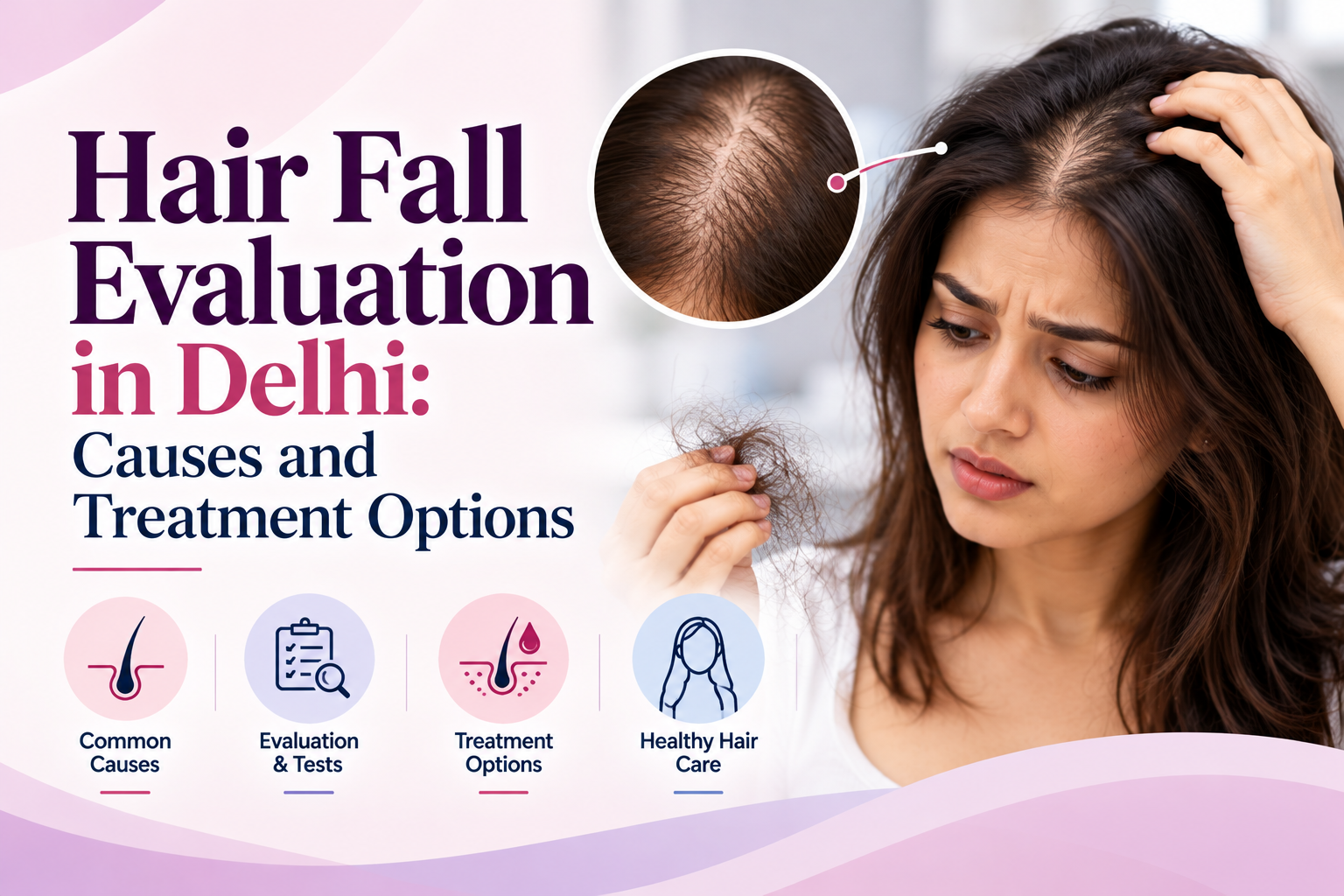
Hair shedding is a normal part of the hair growth cycle. However, noticeable thinning, widening of the hair part, receding hairline, or persistent excessive shedding may indicate an underlying problem.
People looking for a dermatologist for hair fall in Delhi should know that hair loss is not one single condition. Treatment depends on the pattern of loss, medical history, scalp findings, and contributing factors.
What are the common causes of hair fall?
Hair loss can occur for several reasons.
Telogen effluvium: A temporary increase in shedding may develop after a significant illness, surgery, childbirth, major stress, rapid weight loss, or nutritional deficiency. Shedding often begins some time after the triggering event.
Pattern hair loss: Genetic and hormonal influences can cause gradual thinning. It may affect the crown, hairline, or central scalp in men and women.
Nutritional deficiencies: Iron deficiency and inadequate nutrition may contribute to hair loss in some individuals.
Thyroid disorders: Changes in thyroid function can affect the hair growth cycle.
Scalp conditions: Inflammation, fungal infections, and certain autoimmune conditions may cause hair loss.
Hair practices: Repeated tight hairstyles, excessive heat, chemical treatments, and traction may contribute to hair breakage or traction-related loss.
For more information, read the existing article on hair fall in women and men.
When should you consult a dermatologist?
Medical assessment is advisable if hair loss persists, becomes progressively worse, occurs in patches, or is accompanied by scalp pain, redness, scaling, or itching.
Seek prompt assessment if the scalp develops shiny areas or signs of scarring, because certain inflammatory conditions can permanently damage hair follicles.
Sudden hair loss, eyebrow or eyelash loss, and hair shedding associated with other new symptoms also warrant evaluation.
What happens during a hair fall consultation?
A dermatologist may ask about the duration of shedding, family history, recent illness, stress, diet, weight changes, menstrual history when relevant, and medicines or supplements.
The scalp and hair distribution are examined to identify whether the pattern suggests shedding, breakage, pattern hair loss, or an inflammatory condition.
Depending on the findings, investigations may include blood tests for iron status, thyroid function, or other possible deficiencies. Hormonal tests may be considered where symptoms suggest a hormonal cause. Not every patient needs every test.
What treatment options are available?
Medical treatment: Depending on the diagnosis, a dermatologist may recommend topical medicines, oral medicines, or other targeted treatment. Minoxidil is used for certain types of hair loss, but suitability and instructions depend on the individual.
Correction of deficiencies: Where a deficiency is identified, treatment may involve correcting it and addressing the reason it developed. Supplements should not be taken in high doses without a clear indication.
PRP therapy: Platelet-rich plasma may be considered for selected patients with certain types of hair loss. The evidence and expected benefit vary by condition, and it is not a universal solution.
Treatment of scalp disease: Infections and inflammatory scalp conditions require diagnosis-specific treatment.
You can read about PRP hair treatment as a related treatment option.
Can hair fall be managed at home?
Gentle hair care can reduce breakage, but it cannot treat every cause of hair loss.
Eat a balanced diet with adequate protein and energy.
Avoid crash dieting and rapid weight loss.
Limit tight hairstyles and excessive heat.
Avoid unverified hair-growth products.
Follow prescribed treatments consistently.
Take progress photographs at regular intervals under similar lighting.
Hair grows slowly. Many treatments require several months before visible changes can be assessed. Follow-up helps determine whether the treatment is working.
Frequently asked questions
How much hair shedding is normal? Approximately 50–100 hairs daily is often cited as a typical range, although individual shedding varies.
Can stress cause hair fall? Yes. Significant physical or emotional stress can trigger temporary shedding in some people.
Does every patient need blood tests? No. Tests should be selected according to symptoms, history, and examination findings.
Can hair grow back after hair fall? Regrowth depends on the cause. Temporary shedding may recover, whereas some scarring conditions cause permanent loss.
Does PRP work for everyone? No. Response varies, and suitability depends on the type of hair loss.
Conclusion
Hair fall evaluation in Delhi should focus on identifying the underlying cause rather than relying on a one-size-fits-all remedy. A proper examination can help determine whether the problem is temporary shedding, pattern hair loss, a deficiency, or a scalp disorder.
Medical disclaimer: This article provides general information and does not replace individual medical advice.
Leave a Reply
You must be logged in to post a comment.